Today is rice lager day! We’ve never brewed a rice lager before. Now that I think about it, we’ve never brewed with any grain besides barley. So this is a new adventure. While learning about rice lagers, we primarily referenced the following pages:
We followed the cereal mashing process described on Milk the Funk, and we followed the recipe for a “Japanese Lager” clone of Asahi by Brewdyssey on the Brewfather app.
We decided to use the barley and rice we had on hand, so our usual two-row pale malt from Skagit Valley Malting (RIP) and some regular rice Matt had in the kitchen. Is it jasmine? Is it basamati? It is rice.
Recipe
We used a slightly modified version of the recipe from Brewdyssy.
https://share.brewfather.app/3jA3AsGP2URAxe
We started with crushing the rice on the finest setting on the grain mill. Rice is harder than barley, so we had to crank up the torque on the drill we usually use for driving the mill. We cooked the rice with about twice as much water as rice. Temp maxed out at around 165°. The rice absorbed the water pretty quickly, so it never had a chance to boil.
We left the rice on the stove while we heated up the strike water, and the temp was about 158° when we came back to it before adding to the mash tub. Might have sat on the stove for ~30 minutes.


We milled the barley as usual, at the medium setting in the grain mill.
Using an online calculator from Brewer’s Friend, we mashed in at 165° with 12.5 liters of water with a target temp of 152° for a single 60 minute rest.

Held the mash at 152° for about an hour. Maybe 15 minutes longer while we were heating up the remaining water. Dropped down to 150°. Added 3 more gallons of boiling water to the mash for a total of 7 gallons.
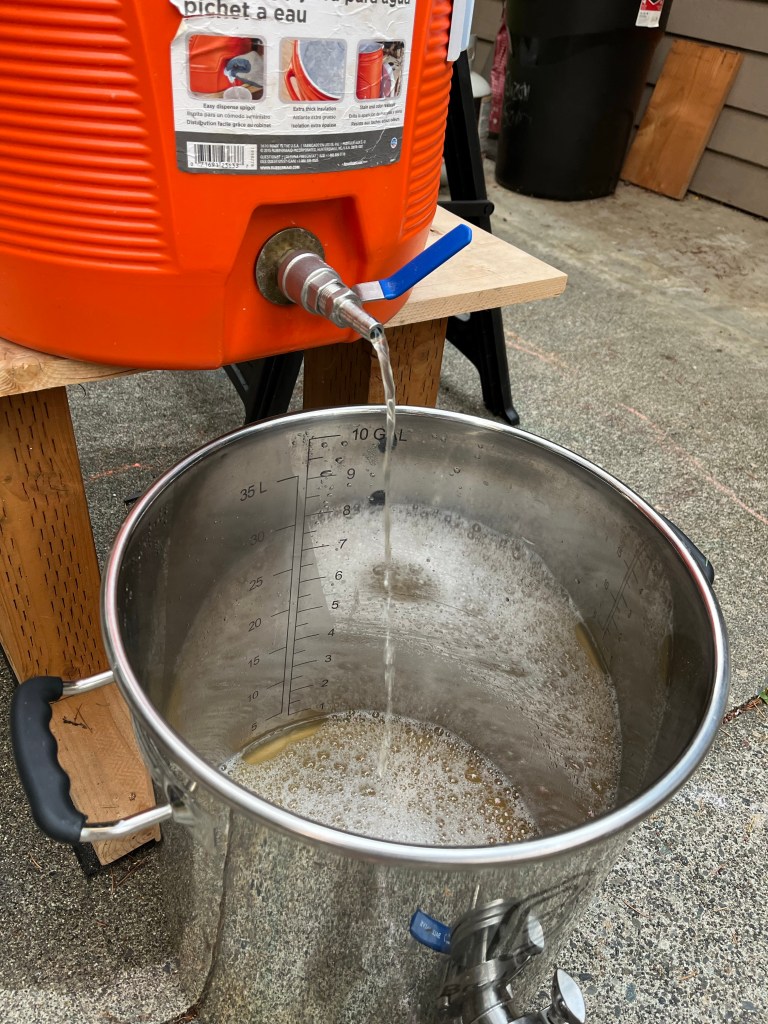
Got about 5.5 gallons of wort before the passive flow ran out. Pressed down on the grain with a dinner plate to get out an extra 0.5 gallons for a total of 6 gallons for the boil.
Cooled the wort down with an immersion chiller to 80°, which is as cool as we could get with the tap water coming out at 72°.
Transferred to a carboy without straining. Added the two packages of yeast along with 6g of glucoamylase (didn’t add any glucoamylase during mash). Put the carboy in a fermentation fridge, currently reading 46° but set to a target of 54°. Hopefully the warmer wort will balance with the cooler fridge to arrive at the target temp in a couple of hours.


So, that wraps up the first brew day writing a blog post along the way. We’ll update the post when we keg and then again when we pour and taste.
Fermentation update
The following Sunday, August 27th, active fermentation has slowed down. There’s some interesting stuff coagulating in the carboy. I wonder if that’s because of the rice.

Kegging
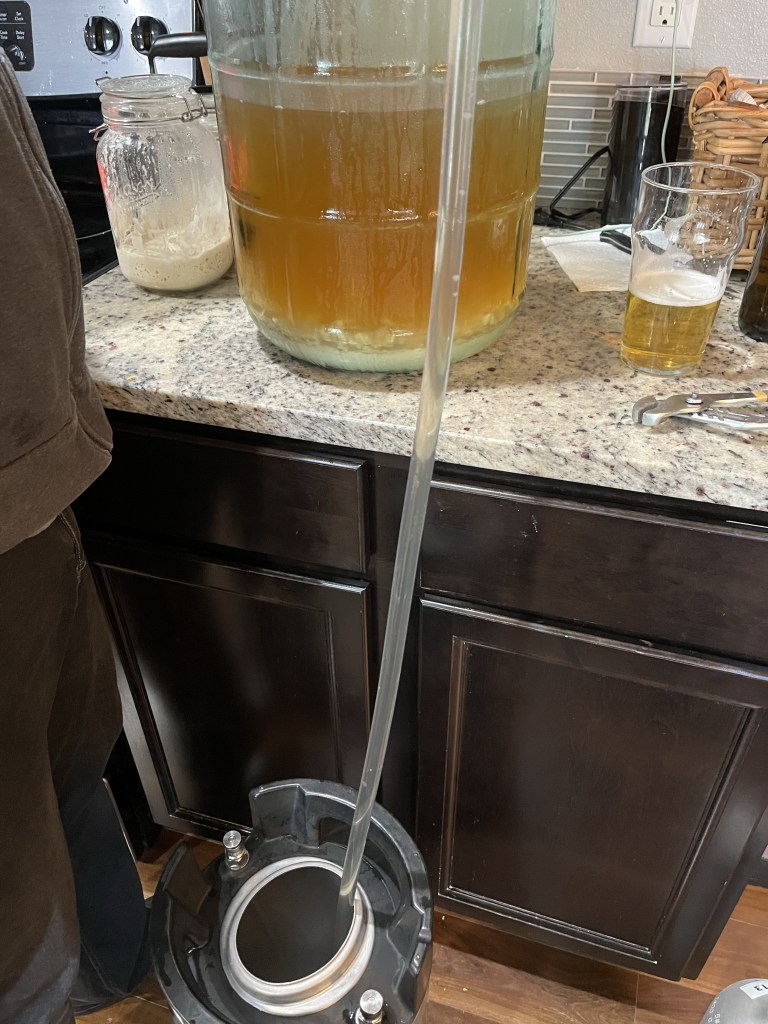


On kegging day after a quick carbonation, rice lager tasted fruity. Not necessarily bad, but I had expected it to be more crisp. I’ll post an update after the beer has had some time to settle and clarify.
Update
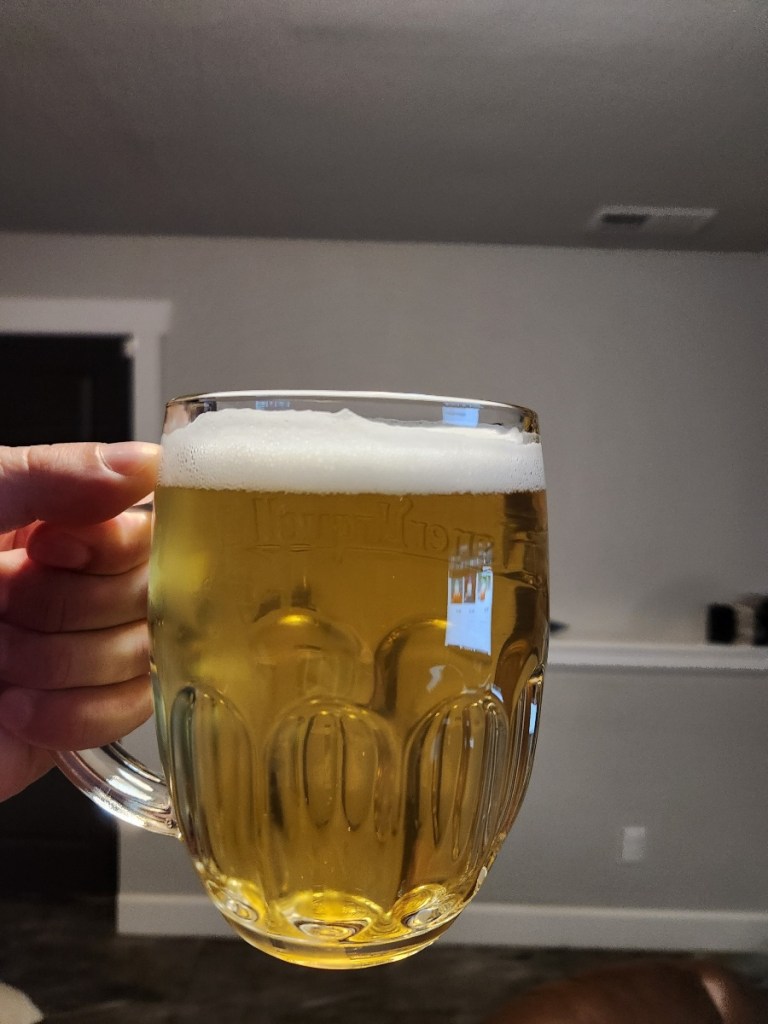
 Weiven Beer